01Listen
Begin with the instrument, not the room.
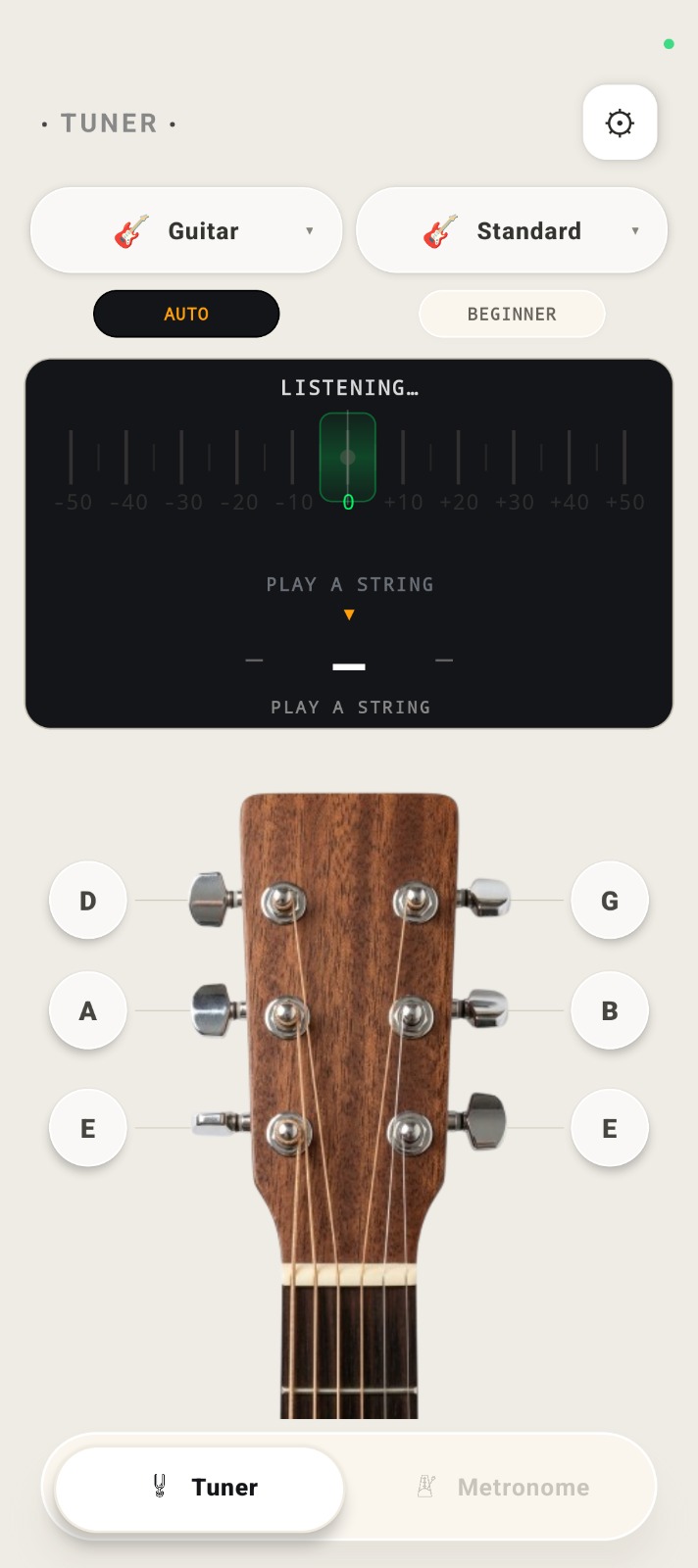
The microphone opens only while the tuner is visible. The incoming sound is separated into short moments the engine can examine without keeping them.
Technology
tempiTune builds music tools that listen carefully, respond clearly and leave the musician thinking only about the music.
Signal journey
Five decisions happen between hearing a sound and showing a note. Most of them decide what not to show.
The microphone opens only while the tuner is visible. The incoming sound is separated into short moments the engine can examine without keeping them.
Breath, chairs and nearby instruments can all resemble useful information. Uncertain sound is held back before it can move the reading.
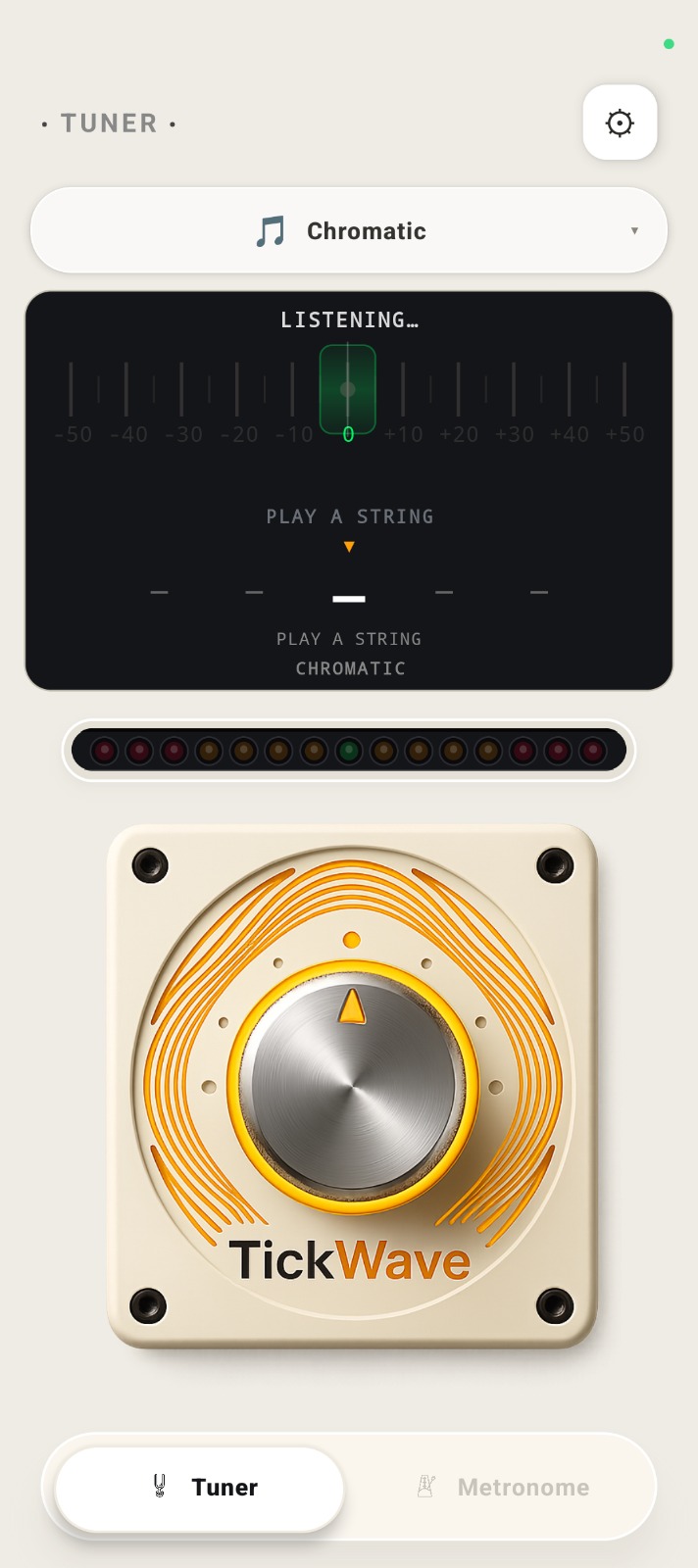
Once the signal is clear enough, its fundamental pitch is compared with the chosen reference and resolved into a useful direction.
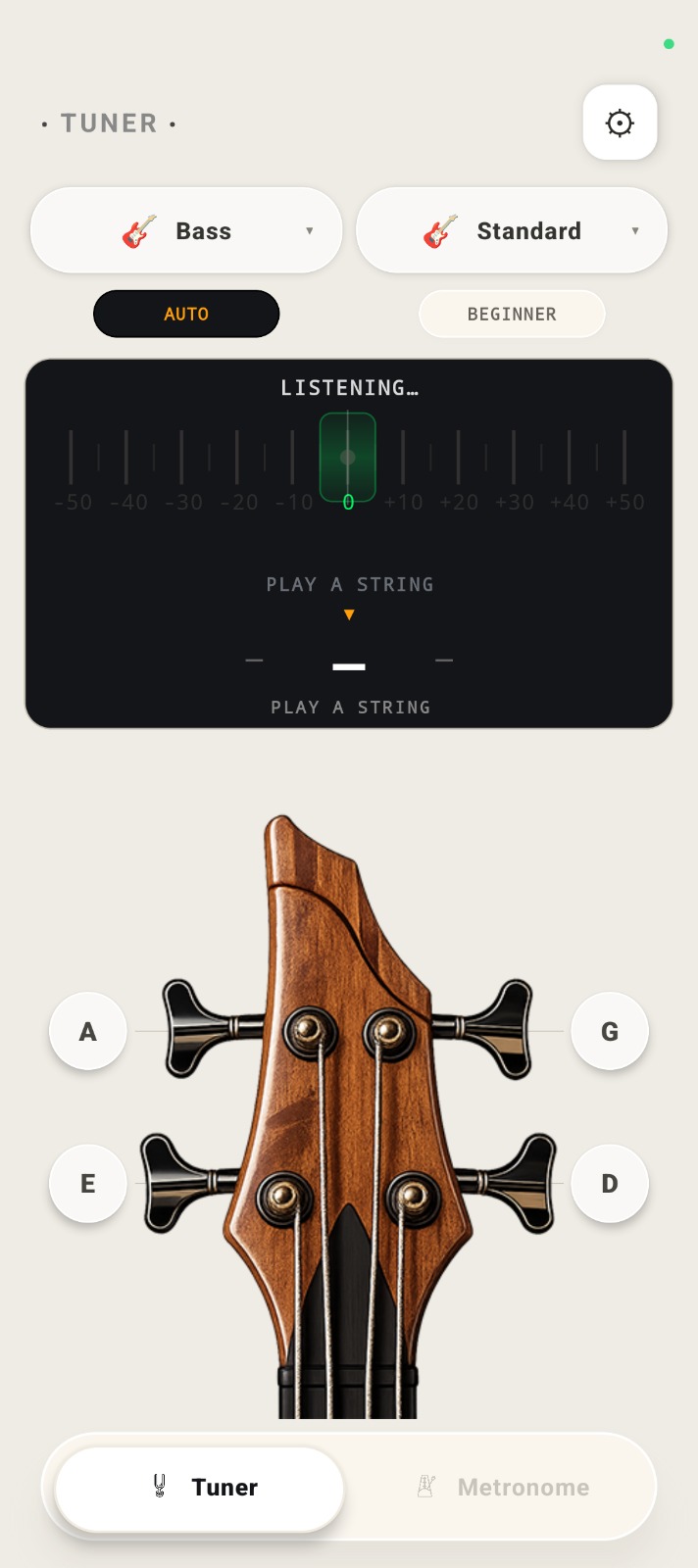
A useful tuner does not repeat every tiny change it hears. The display settles around a confident reading so the musician can act.
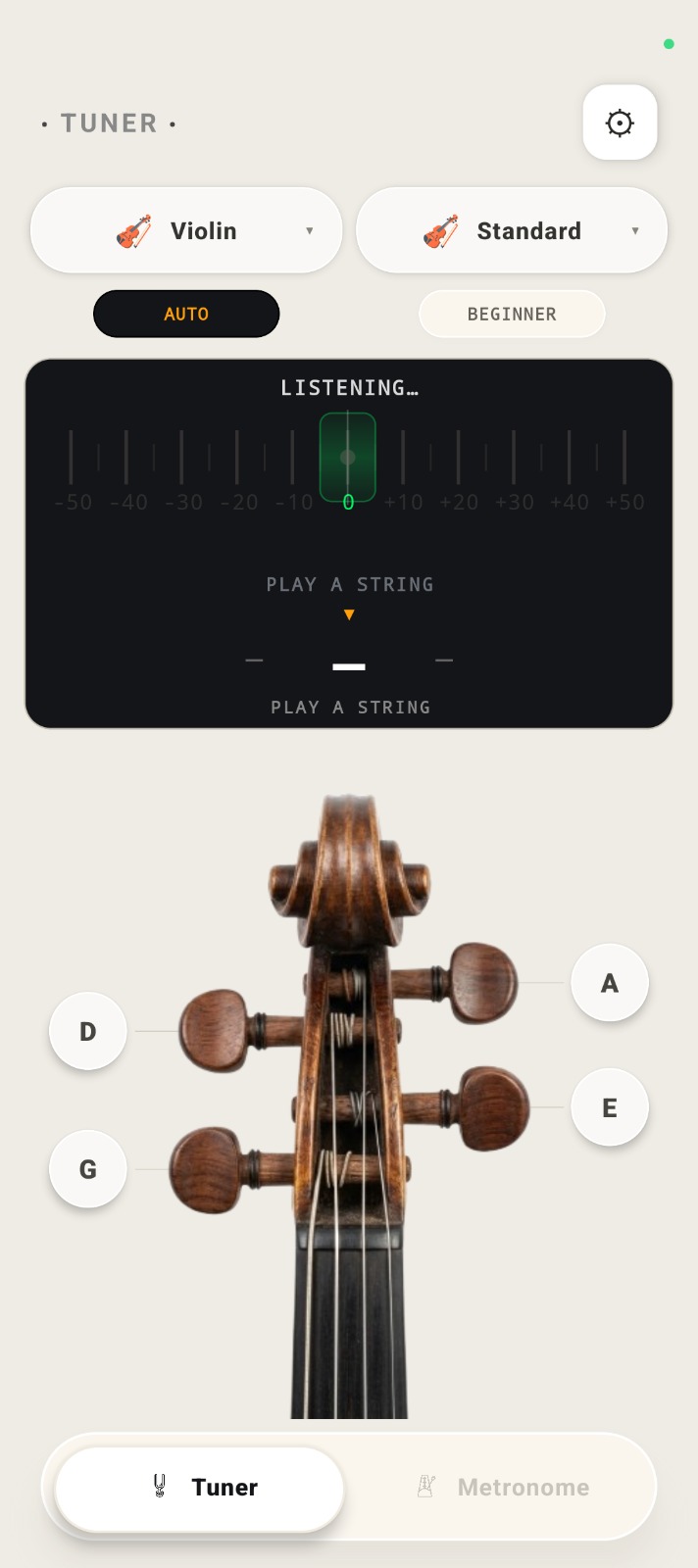
The audio frame leaves memory after analysis. It is never recorded, stored or uploaded.
Engineering principles
We judge the technology by what it lets a musician do: decide sooner, stay focused and trust what the screen says.
01
The interface waits for a trustworthy reading instead of filling silence with movement.
02
Motion confirms state and direction. It never competes with the musician for attention.
03
Controls remain legible in rehearsal rooms, lessons and on stage, where conditions are rarely perfect.
Timing architecture
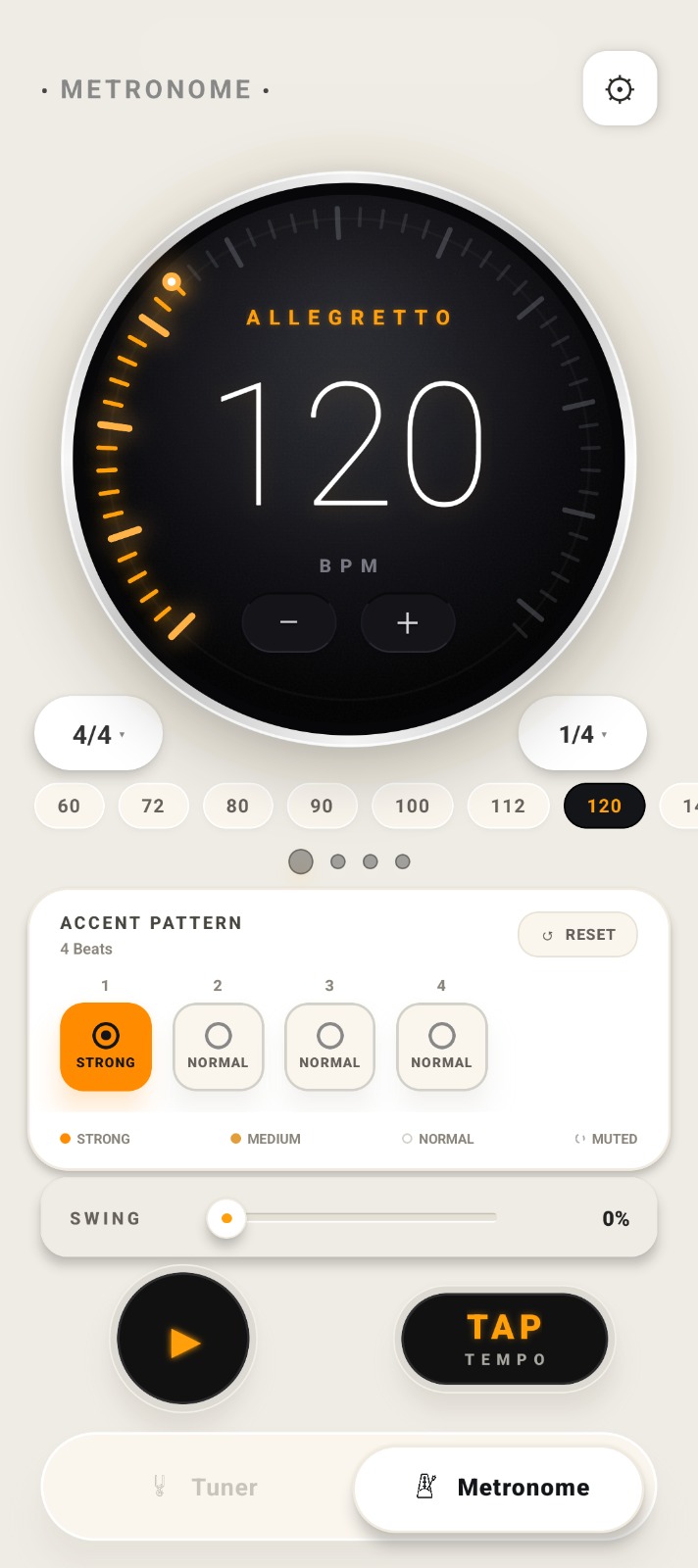
A metronome is not a timer with a sound attached. Its beats need to be prepared together so the pattern keeps its shape when the tempo changes.
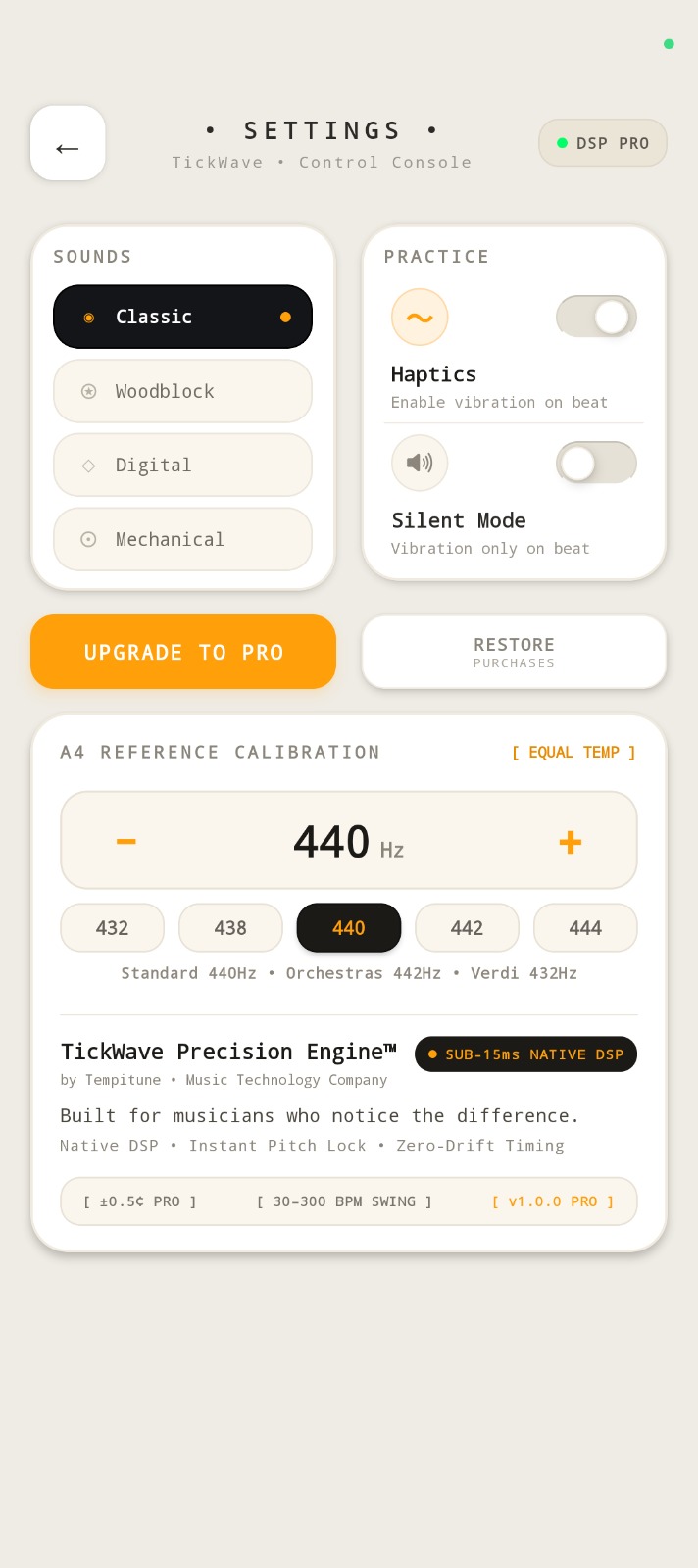
In TickWave, tuning and timing are separate instruments built around the same principle: the response should feel settled, not merely fast.
Privacy by construction
Core tuning and timing run fully on the device. The microphone is used only for real-time pitch detection.
Sound is analysed in memory while the tuner is open.
No recording is written to the device by the tuner.
Audio does not leave the device for pitch detection.
We do not publish accuracy figures or latency claims we have not measured in a way we would defend. When we have numbers worth standing behind, the method will sit beside them.
TickWave brings these decisions together in one tuner and metronome. Launching soon on Android, with iOS coming soon.